


Miss Abbie's Pet Treats: A Business That Kept Growing
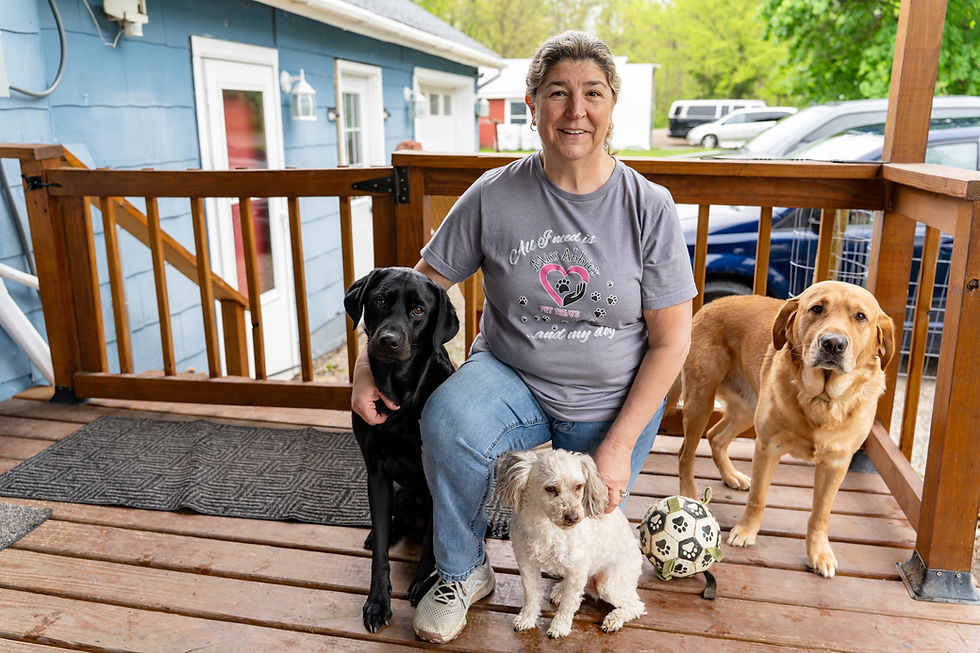
At 7, Abbie Kramer rarely made it through a shopping trip without finding something she wanted.
“Every time we went to the store, it was, ‘I want, I want, I want,’” her mother, Beth Kramer, said. Eventually, she joked, “You’re gonna need to get a job.”
Abbie took the suggestion seriously. After considering selling lotion and soap, she and her mother tried dog treats at a friend’s suggestion. They called the business Miss Abbie’s Pet Treats, and it quickly caught on.
“Within three weeks, we were at the Perrysburg Farmers Market,” Kramer said.
When Abbie lost interest in the business around age 13, Miss Abbie’s had too many loyal customers to close. Beth was working for state government, and she and her husband were also caring for foster children. She left her job and took over the business full-time.
“I thought in the beginning that I was just going to be the overseer. I’d help Abbie build the business, and be the encouraging parent behind the scenes,” Kramer said. “I never thought I would say, ‘Oh yes, I’m now a business owner,’ and have to make all these choices and decisions that I don’t always want to make.”
Kramer and her husband raised seven children. Before Miss Abbie’s, she spent 22 years operating heavy equipment and driving trucks, then returned to school for gerontology and nursing at Bowling Green.
“I’ve worn many, many hats over the years,” she said. “I wanted my children to understand that if you have multiple trades underneath you, you’ll never be without a job. Besides that, it was fun.”
Her gerontology and nursing background led her to focus on the nutritional value of every recipe.
Miss Abbie’s product line has grown from five or six basic treats to smoked bones, single-ingredient meats, kibble toppers, seasonal flavors, and homemade meat sticks. Kramer also develops products around ingredients she can get at a good price. When strawberries went on sale, she bought multiple cases and created a strawberry shortcake treat. Whenever possible, ingredients come from the family’s property, nearby farms, or local farmers markets.

“There are definitely a lot of hands-on, behind-the-scenes, pulling-your-hair-out moments when I’m going, ‘How am I gonna get all this done?’” Kramer said.
Kramer is also a paid provider for her 10-year-old granddaughter, whose school and medical needs determine her schedule. “I could say, ‘Okay, tomorrow is going to go just like this, A, B, C, and D,’ and it will not,” Kramer said. “I’ll be at Z before I’m at A.”
Between her granddaughter's schedule and the business, Kramer is constantly juggling. One day, that meant dropping her granddaughter off at school, drive to Bowling Green to pick up signs for Miss Abbie’s products, then return home for production.
“I have 120 pounds of chicken and pork that will be sliced and put into a dehydrator,” she said. “Then my day is done. Well, minus dinner. But it keeps my brain going, keeps my body going, I enjoy being on the move.”
After nearly 12 years at the Toledo Farmers Market, Miss Abbie’s had spread through the family’s house, garage, and barn.
“We have outgrown the house, the garage, and the barn,” Kramer said.
The business needed a larger smoker and more cold storage, but traditional banks were reluctant to finance a pet-treat company that relied heavily on farmers markets and vendor events. Kramer’s alternatives were to keep saving or turn to predatory financing.
Kramer met ECDI at a local entrepreneurship event. They stayed in touch and eventually had a loan offer that fit Kramer’s needs perfectly. Through ECDI, Kramer received financing, business guidance, and connections to local resources.
“They offer a hand up and the positive energy to help somebody see and reach that next goal sooner rather than later,” Kramer said.
With the loan, Miss Abbie’s bought a rotisserie smoker that holds 400 pounds at once and a walk-in freezer. The loan and the business’ savings also covered an additional $5,500 in equipment from another Lucas County pet-treat company that went out of business.
Within roughly four months, the smoker, freezer, and additional equipment were running in Miss Abbie’s kitchen. The business added products, took on more work, increased sales and revenue, and created jobs.

Kramer’s next goal for the business is dog food. She is completing canine nutrition classes and has received Department of Agriculture approval to sell it.
“ECDI was at the right place at the right time for me,” Kramer said. “In hindsight, we may still be waiting. We might still be earning money to make these purchases.”
As Miss Abbie’s has grown, Kramer has been able to expand the work of Miss Abbie’s Helping Paws, a nonprofit serving rural communities around Woodville. “The rural community has just as many needs as the cities,” she said. The nonprofit has donated pallets of dog food to Lucas County Canine Care & Control, provided free treats to people adopting dogs, and helped low-income owners feed their animals.
The mission is personal, too. Kramer’s granddaughter spends significant time at the children’s hospital where one dog serves the entire facility. Her granddaughter may see the dog only once during a stay. Kramer wants to help bring more service animals into hospitals and schools, as well as courthouses where children may be frightened.
Eventually, she wants a 3,000- to 4,000-square-foot building with a commercial kitchen in front and a fenced dog daycare behind it. Her goal would be to have disabled Veterans would help run the daycare and train dogs for adoption, work that would benefit both. Young adults with developmental disabilities would earn wages making treats alongside the independent providers who support them. Miss Abbie’s Helping Paws would have a permanent home there too. Kramer describes the plan as “one big entity underneath one roof.”
Abbie, now 19, is focused on school and work but helps when her mother calls. She still brags that she started a business at 7.
“I really don’t know what I’m doing,” Kramer said. “I just put one foot in front of the other every day and push forward to see what I can learn and what I can do.”


